What Sitting All Day Is Actually Doing to Your Hips and Back
You don't feel it happening. That's the problem. Nine hours in a chair is quietly reshaping your hips, shutting off your glutes, and loading your spine — and one workout doesn't cancel it.
July 18, 2026 · 9 min read

Add it up honestly: the commute, the workday, lunch, dinner, the couch. Most adults spend 9 to 11 hours a day sitting. And here's the uncomfortable truth I tell every desk-bound client: your body doesn't care what you intend to be — it adapts to what you actually do. If what you do most of the day is fold yourself into a chair, your body gets better at being a chair shape.
This isn't a guilt trip. It's mechanics. Once you understand exactly what those hours are doing to your hips and back, the fixes become obvious — and most of them take less than two minutes at a time.
What Sitting Does to Your Hips
Your hip flexors adapt to the folded position
When you sit, your hips are bent at roughly 90 degrees, which puts your hip flexors — the muscles that run from your lower spine and pelvis to your thighs — in a shortened position. Hold any muscle short for hours a day, every day, and your nervous system starts treating that length as normal. The muscle doesn't just "feel tight" — over time it functionally shortens.
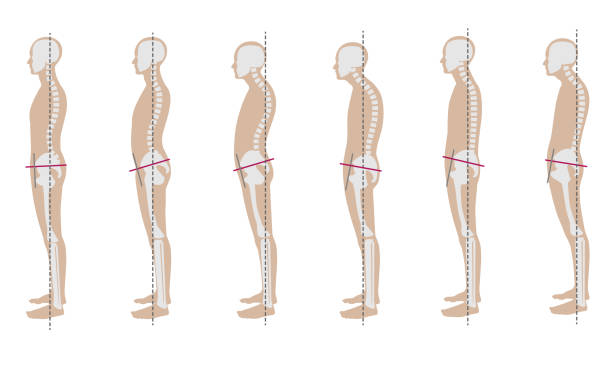
Then you stand up, and those shortened hip flexors tug your pelvis forward and down. That's the anterior pelvic tilt you see in almost every office worker: butt out, lower back over-arched, belly pushed forward — not because of weakness in the spine, but because the front of the hips won't let the pelvis sit level.
Your glutes stop showing up for work
Meanwhile, the muscles you're sitting on are having the opposite problem. Your glutes are the biggest, strongest muscles in your body — your engine for walking, climbing, lifting, and protecting your lower back. But compressed under your body weight and switched off for nine hours, they stop firing well. Coaches call it "glute amnesia," and it's not a joke diagnosis: when tight hip flexors are chronically active, the nervous system reciprocally dials down the glutes on the other side of the joint.
The result: when your body needs power — standing up, climbing stairs, picking up a grandkid — it recruits your lower back and hamstrings to do a job your glutes were built for. If you've read my post on why your glutes aren't firing, this is where that problem starts for most people: at a desk, not in the gym.
What Sitting Does to Your Back
Sitting loads your spine more than standing
This surprises almost everyone: sitting is not "resting" for your spine. Classic spinal research measuring pressure inside the lumbar discs found that sitting upright produces roughly 40% more disc pressure than standing — and slouched sitting pushes that close to double. Your discs are fluid cushions that stay healthy through movement and position changes. Park them under sustained load in one position, and they slowly compress, dehydrate, and get cranky.
Your deep stabilizers clock out
A chair back does the job your deep core and spinal stabilizers were designed to do. Lean on it long enough, day after day, and those small endurance muscles detrain — exactly like any muscle you stop using. Then you ask your spine to handle a weekend of yard work or a heavy suitcase, and the support system isn't there. That's why so much "I just bent over and my back went out" pain traces back not to the bending, but to the nine sedentary hours a day before it.
The slouch makes everything worse
Nobody holds perfect posture for nine hours — you slide into the rounded, collapsed position I call the floppy pickle. In that shape your head drifts forward, your upper back rounds, and your neck and shoulders take on load they were never meant to carry. Posture isn't a stretching problem; it's an endurance problem — and sitting is actively detraining the endurance.
Why Your Workout Doesn't Cancel It Out
Here's the one that stings: research on "active couch potatoes" shows that a single daily workout doesn't fully undo the effects of prolonged sitting. One hour of training is one hour. Nine hours of sitting is nine hours. Your body keeps score by total time, not best intentions.
That's not a reason to skip training — strong glutes and a strong back are still your best protection. It's a reason to change the other nine hours, too. The good news: changing them doesn't require quitting your job. It requires interrupting the position.
What Actually Helps
1. Break up the sitting — every 30 to 45 minutes
The single most effective change is also the simplest: don't let any one position last longer than 45 minutes. Stand up, walk to refill your water, do ten bodyweight squats, or just stand while you take a call. Two minutes of movement re-pressurizes your discs, wakes your glutes, and resets the clock. My no-sweat office workout is built entirely around this idea.
The easiest way to make position changes automatic is a desk that moves with you. Alternating between sitting and standing through the day beats either one held all day.
Recommended — Adjustable Standing Desk
Alternate sitting and standing without interrupting your work. The position change is the point — your hips and discs get a reset every time you switch.
Adjustable Standing Desk — make changing positions effortless →Recommended — Wobble Stool
Active sitting for part of your day: the slight instability keeps your hips and core gently working instead of fully parked.
Wobble Stool — keep your hips awake while you work →2. Open the front of your hips daily
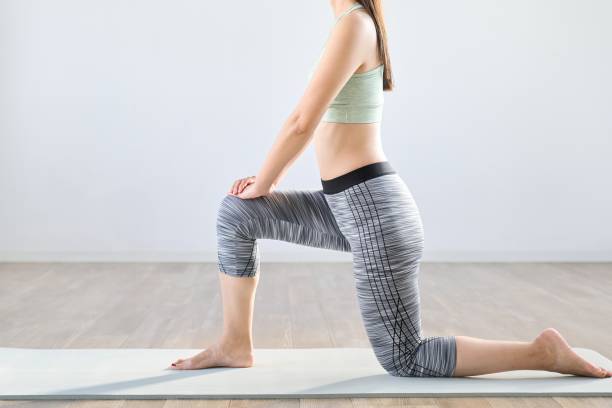
Counter the folded position with its opposite. The half-kneeling hip flexor stretch (back knee down, squeeze the glute on that side, shift gently forward — you should feel the front of the hip, not your lower back) held for 30–45 seconds per side, once or twice a day, directly fights the shortening. The couch stretch is the stronger version once that feels easy.
3. Wake your glutes back up
Stretching the front only works if you also switch the back on. Two minutes of glute bridges, banded lateral walks, or clamshells — before your workout, or honestly any time — re-establishes the connection sitting erodes. This is where a simple set of bands earns its keep.
Recommended — Mobility Band Set
Glute bridges, lateral walks, and clamshells with a band turn "my glutes are asleep" into "my glutes are running the show" in a few minutes a day.
Mobility Band Set — the two-minute glute wake-up call →4. Give your hips and back some maintenance
A few minutes of foam rolling through the hip flexors, quads, and upper back in the evening reduces the stiffness that builds through a seated day and makes the stretches above work better. It's recovery for a body that spent all day in one shape.
Recommended — Foam Roller
Evening maintenance for desk workers: quads, hip flexors, and upper back. A few minutes undoes hours of accumulated stiffness.
Foam Roller — end-of-day reset for hips and back →5. Train the muscles sitting weakens
Finally, the long game: strong glutes, strong deep core, strong upper back. Squats, hinges, carries, and rows are the antidote to the chair — and none of them require a gym. If you're building this at home, my three home gym setups show exactly what fits in a normal bedroom at every budget, and my Desk Warrior system puts the whole routine together.
The Bottom Line
Sitting all day shortens the front of your hips, switches off the biggest muscles you own, and loads your spine more than standing ever does — and it does it so gradually you don't notice until your back "suddenly" hurts. There's nothing sudden about it.
You don't need a new job. You need to interrupt the position every 30–45 minutes, open your hips daily, wake up your glutes, and train the muscles the chair is putting to sleep. Small, boring, consistent — exactly the kind of thing that works.
Ready to Take the Next Step?
Book a free strategy call. We'll figure out what your body needs and whether live training is a fit.
Book Your Free Strategy CallPrefer to start in writing? Fill out the intake form
Keep Reading

Knee Pain 101: What It Is, Why It Happens, and What Actually Helps
Knee pain is the most common joint complaint there is — and the most misunderstood. Learn what the different types feel like, why they happen, and why the fix is almost never rest.
Why Your Back Hurts When You Build Furniture Or Vacuum
You do not hurt your back deadlifting. You hurt it building IKEA furniture. It is not weakness. It is control. Learn why household chores destroy your back and how to fix it with posterior chain endurance.
Dont Be A Floppy Pickle
You are not tired. You are collapsed. Posture is not a stretch problem. It is a strength and awareness problem. Learn The Franco System for stacking your skeleton and owning your standing position.